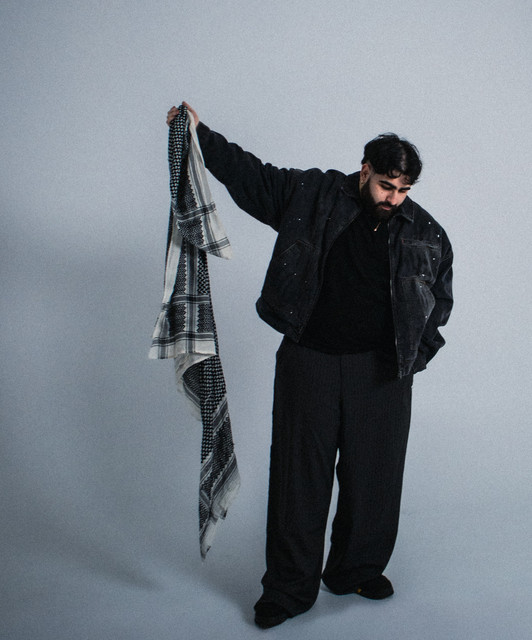
Two months before “Freaked Out” became one of the strangest and most joyful rap breakthroughs of 2026, Baban Hussain was working from a self-run Auckland studio and releasing music to a few thousand followers. Then a dance edit, a sharp bob haircut and a record built for instant recognition changed the scale of his life.
Hussain performs as Fat Papi, a name he has described as a tongue-in-cheek reference to his size and the way strangers read his background. He is 22, Kurdish and New Zealand-born, with parents who came from Iraqi Kurdistan. That identity is not a biography detail pasted onto the campaign after the song became popular. It sits at the centre of how he understands the achievement.
Before the charts, there was an artist learning to be seen
Fat Papi’s first EP, Surely At Somepoint, arrived in 2025, but his path into rapping was not automatic. He has spoken about initially preferring production because performing publicly made him self-conscious. Growing up, being visibly different could invite jokes; putting his own voice and face forward felt like a risk.
That context makes the confidence on “Freaked Out” land differently. His relaxed delivery does not sound like someone fighting for space inside the beat. It sounds conversational and slightly amused, which lets Prodshushy’s bright electronic movement do much of the heavy lifting. The record is club-minded without chasing a standard US trap template.
Hussain has named 2010s club music, Kid Ink, Mustard and several American regional styles among his influences. He also credits the Kurdish music he heard growing up with shaping his ear. The result is not easily reduced to one scene, which is probably part of why the song could travel through so many of them.
How Fat Papi met Prodshushy
The other essential name is Owen Omen, the Australian-based producer known as Prodshushy. Their partnership started online after Hussain recorded over one of Omen’s beats and sent it back. Hussain had a much smaller following and did not expect a response. Omen replied because the performance worked.
They developed quickly from there, working between Auckland and Perth before meeting in person. Fat Papi has praised Omen’s mixing and range of influences; Omen has highlighted the rapper’s ability to move across different beats. “Freaked Out” was completed with the speed that often comes from genuine chemistry rather than a forced writing camp.
That cross-Tasman relationship matters to TheRapReporter’s Australian readers. The breakthrough is a New Zealand story, a Kurdish story and an Australian production story at the same time. Modern rap careers rarely follow a neat national border, and this one almost seems designed to prove the point.
The bob video that changed everything
Released in May, “Freaked Out” initially struggled. The pair tried different promotional ideas before Prodshushy posted a short dance edit that passed one million views. A few days later, UK creator Jocelyn Meiere, better known as Miss Diva Bob, used the track in a video listing reasons to get a bob haircut. The joke was simple, visual and repeatable. The song’s clipped synths and confident rhythm fitted it perfectly.
The format spread rapidly. Raye joined the haircut trend, while Megan Thee Stallion posted herself mouthing along to the song while cooking. Fat Papi’s official audience expanded alongside billions of views connected with videos using the music.
Hussain has repeatedly credited Meiere for the turning point. That is worth noting because viral stories are often rewritten after success, with everyone claiming the result was carefully planned. His version is more honest: the artists made and promoted a finished record, a creator found a format that unlocked it, and audiences carried it further than anyone expected.
From a trend to a measurable breakthrough
“Freaked Out” reached No. 1 on Shazam globally, charted in the United Kingdom, Australia and the United States, and debuted at No. 88 on the Billboard Hot 100. The Guardian reported that the moment made Hussain the first Kurdish artist on the Hot 100 and only the second New Zealand rapper to reach it. His Spotify monthly audience grew by nearly 10 million.
Numbers can make a story feel impersonal, but this milestone has a community behind it. Hussain has spoken about growing up within Auckland’s small Kurdish population and being the only Kurdish student at his school. Appearing on a major American chart does not solve the lack of Kurdish representation in Western culture. It does, however, create a visible example that did not exist before.
What happens after “Freaked Out”?
Fat Papi and Prodshushy have secured management and recording deals, prepared more collaborations and announced performances at Australia’s Spilt Milk festival in December. A follow-up single was planned for September, giving the pair a quick opportunity to show whether new listeners are attached to their sound or mainly to one trend.
The next phase should not be judged only by whether the second song copies the first song’s numbers. Viral success is too unpredictable for that standard to be useful. The better questions are whether Fat Papi can deepen his writing, whether the partnership with Prodshushy continues to evolve and whether live audiences connect with the personality that short clips introduced.
There is an appealing lack of corporate polish in this story. A smaller artist sent a producer a recording. A song they thought was underperforming found the right creator. A haircut joke carried Kurdish and Kiwi identity into the world’s largest singles chart. None of it was inevitable. That is exactly why people are paying attention.

No comments yet. Start a thoughtful discussion.